Essay completed for ‘Screen Culture and Theory’ 31st March 2023
From the development of film, the motion picture theory has considered to be more artistic than more curious individuals could imagine. Art is contained on a list full of multiple subheadings that in certain ways change the process of creation, yet always leading to the same destination, which is storytelling through a creative written or visual process. In this article, I will establish some of the traits in relation to filmmaking as fine art practice. It will accommodate the meanings behind the photographic process of the moving image, with the French film ‘Le Jetée’ (1962) will be a main ingredient of this topic. In addition to how artists have the dignity to use their own creative, cognitive rituals to develop a thrilling, curious way of thinking, we will also look at the film ‘3 Women’ (1977) in establishing this argument. Along with creating characters that appeal to the artistic mind/audience, the representation of back then to be unknown equality is looked at especially. From the gifted art forms of today, I would argue that filmmaking exceptionally part of the formal artistic practice.
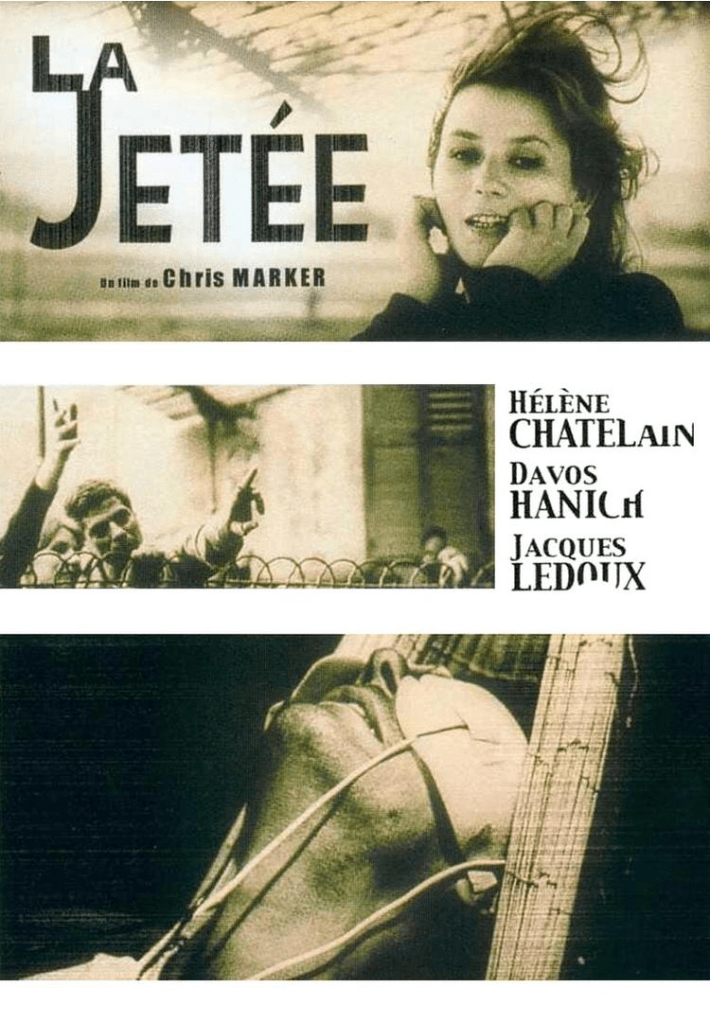
The origin of the motion picture developed a lifelong expression of painting in realism of a plastic metaphor. (Basin 166-170) mentioned that painting automatically transformed the balance between realism and symbolism. This, in addition to the artists who created the need of storytelling to combined with moving images to redefine art as physically moving on screen, can have an element of confusion yet true realism. The lenses used in the 1960s-70s illustrated the pavement for an object to be able to satisfy the features of the actors who developed into their craft of character. “Photography affects us like a phenomenon in nature…whose vegetable or earthly origins are an inseparable part of their beauty” (Basin, 169). If we look at ‘Le Jetée’, directed by Chris Marker, the use of still images can’t be considered as a photographic slideshow, bus as another cinematic approach to reveal a narrative, (Orlow, 177-185) Orlow defines ‘Le Jetée as breaking barriers and laws in the filmmaking industry, with art being put into place as the editing technique is in my opinion, quite artistic in relation to the syncopation of each shot with the dissolve effect being put into place in certain scenes. For example, where this film is set, the man (played by Davos Hanich) is seen in various shots attempting to get to know the woman, (played by Hélène Chatelain) in various locations in Paris, such as a gallery, to sitting on a bench in a famous Parisian park. The images in ‘Le Jetée’ and other others similar to this example of art clarifies the film world that it cannot be segregated in telling a thrilling fictional narrative with frame, instants, editing, the storytelling of the talented VoiceOver and the photographs that a photographer and videographer complied with Harich, Chatelain and the remaining of the supporting roles can exceptionally develop a tale of action in the years of expanding the nature of cinema (Orlow, 177-185).
As directors and actors were able to use their cognitive thinking and artistic traits to compel a three-act structure in the 1960s, most artists were able to control what and how they wanted their storytelling traits and favour how each shot and what dialogue could increase their chances on telling a story relatable or unnatural. The content displayed in film in the 1960s, despite the creations already featured in the box office, had some restrictions. Within the 60s, films such as ‘Le Jetée’ was unusual to some degree as the anticipation for features would rather witness live movement instead of a sequence of photographs. The actors would’ve have the creative freedom to experiment in addition to how each shot/photograph was going to play out. As the genre of this film is science fiction which in fact was unexpectedly popular in the 1960s, the black and white images in which Marker demonstrates this piece of art as an example of a documentary rather than a motion picture. Nevertheless, Marker leaves the audience in some sort of confusion, as the film gives the viewers questions to analyse and to hopefully rewatch the film in order to give some infringement to the mind, (“study corgi, 2022). If we look as ‘3 Women’ directed by Robert Altman, having three female leads in a motion picture was still in minor ways rare. However, when the ‘avant-garde’ was introduced during that decade in the U.S., the more up-and-coming directors saw an opportunity to expand their horizons and use this art form as experimental films were starting to trend. Altman would see his sense of creativity to overlap dialogue and convey discussions and inspiration to draw upon creative philosophy. From the cast, to the camera who would rarely cut through a scene, to improv and dialogue over-lapping each other, Altman was ahead of his time using his practice of art to step outside of the box and go beyond his written script and collaborate with fellow artists to see where they can go beyond their creative horizons (Man, 2017).
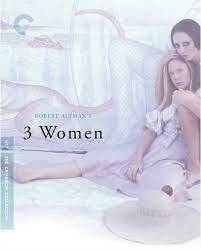
‘3 Women’ is an ideal example of a selection of women who in today’s modern narrative, wouldn’t as specifically identify to modern women with potential awareness of one another. From the example of experiment, Altman originally developed the initial concept from a chapter of his dreams one typical night (Ebert, 2004). Especially in today’s day and age, a lot of characters need to relatable to an audience member in order for the viewers to engage in the story and experience circumstances of that character from beginning to end. (French, 2015) explained that two women, eventually both play the same character on different parts of the spectrum. Sissy Spacek as ‘Pinky’ is played as an energetic, shy, childlike character, while ‘Millie’ played by Shelby Duvall is more sophisticated and confident that Pinky, with Janice Rule as ‘Willie’ is artistic, quiet and pregnant. married to heavy drinker ‘Edgar’, played by Robert Fortier, Altman assured that each role would have contrasting yet analogues traits in addition to this. Character development is what really strikes a story and creates a structure that signifies growth in not just the art of the narrative, but also putting our identity into practice. For example, Millie is interested in fashion, advertising has the ideation that everyone that she meets is inspired by her taste of attire. Whereas Willie paints meaningful, cryptic murals for the walls of Millie and Pinky’s swimming pool. The theory of the three main roles is this feature compares to the each character is to relate as one single person (French, 2015). Similar to paintings, we can identify emotions, flaws and outcomes by witnessing a still image someone has meticulously created in order to attract our attention. Film is no doubt the very same, we spectate Willie as some sort of an earth goddess, who transports herself into a world of her own while taking her independent strolls across the Californian dessert while carrying an unborn child. But Pinky is introduced at the beginning with an unknown aura; unaware of her current purpose in life. As soon as she spots the two women a minor epiphany occurs; knowing exactly what she loves and who she wants to be. In order for the story to change and evolve, the characters have traits that appeal to the human emotions (Elbert, 2004). The scripts that were written for films such as ‘3 Women’ need to have a dramatic theme or characterised to form a feature the Hollywood reporters can preach about. But for a visual, fictional narrative to be composed there colour palettes and the minor styles or hints Altman, along with his stylist and production designer agree on. In relation to this, Millie will more likely to be seen dressed in long yellow and white outfits to impress her admirers. Those certain tweaks can polish a characters in any practice of art as it keeps a familiar section in viewers brains as more characters in art come to be (Elbert, 2004).
We can clarify that women have had the most tweaking in leadership yet appearance when it comes to their representation on screen. (Diane, 1998) illustrated that films containing women are more or less based on women’s fantasy for the female population anticipate to a sense of construct. The sexual difference that men and women are formed around are adorned in drawing a definition on what role and reputation works for a certain gender. On the other side of the spectrum, men were constructed by art and storytelling to be heavy drinkers, masculine and the hero of a fictional structure. Dominant cinema had the female representation set out to be the minder, gossiper and minding the men’s prized possessions while cleaning up their mistakes. If we think of women viewed in art, we mainly prioritise the idea that women either create or be in art. In relation to being in art, in the opinion of the opposite sex, women were usually on display for the enjoyment of art; where the observer or creator feels a sense of power over their subject, “the erotic identity of the subject from the object on the screen” (Ibid, 2023). In ‘3 Women’, we see the three main characters express themselves around a gender who considered them unworthy for affection nor independence, yet that is exactly what the women end up becoming in the end, a family not considering marriage nor blood, but relation to emotion and benefits. But in 1962, where ‘Le Jetée’ was set and filmed in, the representation of genders composed a rather curious thus far as debatable. Set during the devastation of a fictional World War III, the German doctors abdicating the experiments of time travel only requested for men to participate. The ,an is held in a prison camp in Paris until it is his time to take on the consequences of the doctor’s desires (13boneo, 2019). The woman is admired as a figure in the man’s dream, beautiful, curious and obliged to remain loyal to her male companions until death parts her ways with the earth. According to (Huebner, 2015), Marker’s obsession with references real life events in this art form can be combined with the “nostalgia” and the analysing of roles carried out through this period is in my opinion another trait into the European experimental filmmaking of the early 1960s.
The continuation of art in the category of filmmaking is without a doubt exciting to see transform and grow to a certain degree. Each artist and continent have different ways of developing ideas and trends that would make it to Hollywood short lists every year (Prinz, 2022). European and North American cinema today have more sense of internal realism than most cinematic communities, so witnessing movies such as ‘The Eyes of Tammy Faye’ (2021) and ‘Avatar’ (2009) are movies that pushed boundaries in artistic visuals and storytelling the continuation of epic, engaging pieces of collaborative work.
When adding some of the categories that create fine art with motion picture, the use of slow-motion visuals that add meaning and epic mindsets to a viewer’s concentration to the settings of the images in ‘Le Jetée’, to the narrator’s smooth yet captivating voice interrupting the silence of some of the intense visuals containing digesting tones to the photographer’s use of framework, (13boneo, 2019). The characters biographies to which is rightfully viewed in almost every approach to art, in addition to artists breaking barriers into where their imagination and creativity could taken them, and the ways gender representation has graciously expanded in a minor extent into how men and women are identified in paintings, written scriptures and visual approaches. All of these chapters and more than can reach your current scale are reasons why film is most certainly defined as a category in formal art practice, and that will develop as other artists gain inspiration to create various stories and biographies in whatever practice they wish to pursue.
References:
- “3 Women (1977) – IMDb.” Www.imdb.com/title/tt0075612/. Accessed 20 Mar. 2023.
- “3 Women Analysis: What Do the Pool People Mean?” http://Www.youtube.com, 8 Apr. 2016, http://www.youtube.com/watch?v=ihXhgfsVg84. Accessed 25 Mar. 2023.
- 13boneo. “Short Film Analysis: La Jetée.: Viv Bone’s Film Studies Blog, 6 Aug. 2019, 13boneo.wordpress.com/2019/08/06/short-film-analysis-la-jetee/. Accessed 21 Mar 2023.
- Bazin, André. “From What Is Cinema” Film Theory and Criticism, edited by Leo Brandy and Marshall Cohen, New York, Oxford University Press, 2004, pp. 166-167. Accessed 21 Mar 2023.
- “Ciné-Club Presents, “La Jetée” (1962) & “Toute La Mémoire Du Monde” (1956). “Feminism and Theory, edited by Constance Penley, Great Britain, BFI Publishing, 1998, pp. 196-215.
- Diane, Mary Ann. “Caught and Rebecca: The Inscription of Femininity as Absence.” Feminism and Theory, edited by Constance Penley, Great Britain, BFI Publishing, 1998, pp 196-215.
- Ebert, Roger. “3 Women Movie Review & Film Summary (1977) | Roger Ebert. “https://Www.rogerebert.com/,26 Sept. 2004, http://www.rogerebert.com/reviews/great-movie-3-women-1977. Accessed 21 Mar. 2023.
- French, Philip. “3 Women Review – Exquisite Early Robert Altman Film.” The Guardian, 16 Aug. 2015, http://www.theguardian.com/film/2015/aug/16/3-women-dvd-review-philip-french-robert-altman. Accessed 24 Mar. 2023.
- https//mubi.com/cast/chris-marker, et al. “La Jetée.” Muni.com, muni.com/films/la-jetee. Accessed 19 Mar. 2023.
- Huebner, Karla. “Nostalgia and La Jetée”. Contemporary: Historical Presence in Visual Culture, vol. 4, 3 Aug. 2015, pp 95-107, https://doi.org/10.5195/contemp.2015.132. Accessed 23 Mar. 2023.
- “Le Jetée by Chris Marker.” Study Corgi, 11 July 2022, study corgi.com/la-jetee-by-chris-marker/. Accessed 23 Mar. 2023.
- Lieberman, Lisa. “Le Jetée.” Deathless Prose, 2 Feb. 2014, deathless prose.com/2014/02/02/1692/. Accessed 22 Mar. 2023.
- Mak, Shawn. “What I Know about the Creative Process I Learned from Robert Altman”. Antics@Play, 22 May 2017, http://www.anticsatplay.com/blog/what-i-know-about-the-creative-process-i-learned-from-robert-altman/. Accessed 19 Mar. 2023.
- Marker, Chris. “Le Jetée.” IMDb, 16 Feb. 1962, http://www.imdb.com/title/tt0056119/. Accessed 22 Mar. 2023.
- Orlow, Uriel. “The Dialectical Image: La: Jetée and Photography as Cinema//1999/2006.” Mixed Media Mixed Memory, pp. 177-185.
- Prinz, Jesse J. “When Is Film Art?” Revue Internationale de Philosophie, vol. 254, no. 4, 2022, pp. 473-485, http://www.cairn.info/revue-internationale-de-philosophie-2010-4-page-473.htm. Accessed 23 mar. 2023.
- Stacy, Jackie. “Desperately Seeking Difference.” Screen, by Jackie Stacy, Oxford Academic, 2023, pp. 48-61.
- Tafelski, Tanner. “Dream Baby Dream: Robert Altman’s 3 Women (1977) – Senses of Cinema.” Senses of Cinema, http://www.senseofcinema.com/2016/cteq/dream-baby-dream-robert-altmans-3-women-1977/. Accessed 20 Mar. 2023.
 Hannah Crowley
Leave a comment